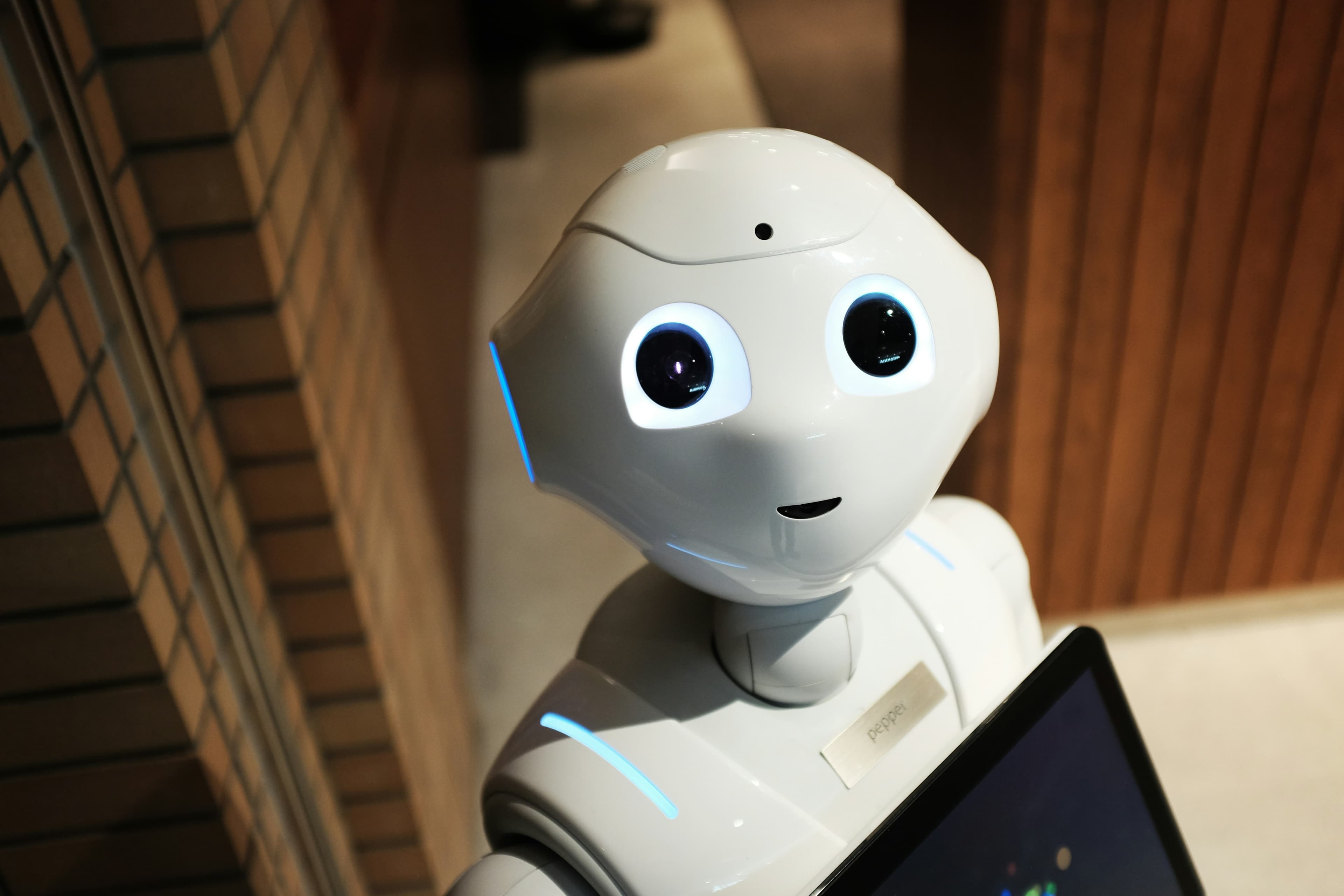
Modern bots are full-fledged intelligent systems capable of automating businesses, saving dozens of hours of human labor, assisting with education, customer support, data analysis, and even everyday tasks.
Artificial intelligence and automation technologies are no longer tools used only by large corporations. Today, they are actively implemented by online stores, startups, freelancers, IT teams, and ordinary users. That is exactly why bot development has become one of the most promising directions in the digital industry.
In this article, we will examine how modern bots help people, which technologies are used to build them, why businesses are rapidly adopting automation, and what the AI bot market may look like in the coming years.
What Modern Bots Really Are
A modern bot is a software system designed to perform tasks instead of humans using predefined logic or artificial intelligence.
The key difference between modern AI bots and old scripted systems is the ability to analyze information, make decisions, and adapt to user behavior.
While older bots could only respond using templates, modern systems are capable of:
maintaining full conversations;
understanding context;
analyzing images and documents;
performing automated actions;
integrating with CRM systems and databases;
searching for information independently;
generating content;
assisting with sales and customer support.
In practice, AI bots are gradually evolving into digital assistants.
Why the Popularity of Bots Is Growing Rapidly
The world is moving toward an automation-driven economy. Companies are trying to reduce expenses, accelerate workflows, and eliminate repetitive manual tasks.
This is where bots become critically important.
According to SEO and AI market research, search engines and digital platforms are increasingly integrating artificial intelligence into their ecosystems. (wordstream.com)
Today, automation is used almost everywhere:
online stores;
delivery services;
banking;
marketing;
customer support;
Telegram and Discord services;
SaaS platforms;
analytics systems;
monitoring tools;
AI agents for businesses.
The reason is simple: a bot can work 24/7 without breaks, fatigue, or human error.
How Bots Help People in Everyday Life
1. Communication Automation
One of the most common applications is communication automation.
For example:
customer support;
request processing;
online consultations;
technical assistance;
appointment scheduling;
notifications and email campaigns.
People no longer need to stay at their computers around the clock. Bots handle most routine operations automatically.
For businesses, this means:
reduced workload for employees;
faster request processing;
higher conversion rates;
lower operational costs.
2. Telegram Bots as a New Digital Infrastructure
Telegram has evolved far beyond a messaging app. It has become a complete automation platform.
Today, Telegram bots can:
process payments;
manage servers;
provide analytics;
launch AI features;
automate sales;
manage tasks;
monitor websites;
control advertising campaigns;
integrate CRM systems.
Telegram bots became popular for several reasons:
simple deployment;
fast development;
low maintenance costs;
massive audience reach;
convenient API infrastructure.
That is why many startups begin with Telegram bot development instead of building full websites or mobile applications first.
3. AI Bots and Artificial Intelligence
The real breakthrough came after the widespread adoption of neural networks and large language models.
Modern bots can now understand users instead of simply executing commands.
Today’s AI bots use:
Large Language Models (LLM);
NLP systems;
vector databases;
generative artificial intelligence;
semantic search;
AI memory systems;
retrieval architectures.
Thanks to these technologies, entirely new use cases have emerged:
AI consultants;
AI programmers;
AI analysts;
AI marketers;
AI customer support operators;
AI business assistants.
In some scenarios, a single AI bot can already replace a small team of employees.
Technologies Used in Modern Bot Development
Backend Development
The foundation of every bot is server-side logic.
The most commonly used technologies include:
Python;
Node.js;
Go;
PHP;
Rust.
Python and Node.js are especially popular because of their massive ecosystems for AI and automation.
Databases
Bots must store user data, message history, and operational results.
Developers commonly use:
PostgreSQL;
MySQL;
Redis;
MongoDB;
Vector Databases.
Vector databases are especially important for next-generation AI bots.
AI Integration
Modern AI bots rarely work fully independently.
Usually, they connect to:
language models;
AI APIs;
data analysis systems;
cloud computing services.
This is why AI Agents — autonomous AI systems capable of independently executing tasks — are rapidly becoming a major industry trend.
Webhooks and APIs
Most modern bots rely heavily on API integrations.
For example:
payment systems;
CRM platforms;
analytics tools;
notification systems;
email services;
marketing platforms;
cloud infrastructure.
In practice, bots often become the central connection layer between different digital services.
Why Businesses Benefit from Bots
Cost Reduction
A single AI bot can replace:
support operators;
managers;
consultants;
parts of marketing operations.
This is especially valuable for startups and small businesses.
Scalability
Humans are limited by time and physical resources.
Bots can handle thousands of users simultaneously.
That makes automation essential for rapidly growing projects.
24/7 Availability
Bots do not sleep, take vacations, or require breaks.
For online businesses, this is a major competitive advantage.
Faster Workflows
Automation can reduce execution time dramatically.
For example:
automatic request processing;
report generation;
AI-driven analytics;
payment processing;
automated moderation.
AI Agents — The Next Stage of Bot Evolution
The industry is gradually moving away from simple chatbots toward autonomous AI agents.
The difference is enormous.
A traditional bot:
reacts to commands.
An AI agent:
independently analyzes tasks;
makes decisions;
executes chains of actions;
interacts with external services;
can correct its own mistakes.
AI agents are already considered one of the most important technology trends of the coming years. (clickcentricseo.com)
Where AI Agents Are Already Being Used
Software Development
AI already helps developers:
write code;
detect bugs;
test applications;
analyze architecture;
generate documentation.
Marketing
AI bots can:
write SEO articles;
analyze competitors;
automate advertising;
collect analytics;
generate content.
E-Commerce
Online stores use bots for:
order processing;
product recommendations;
customer communication;
personalization;
logistics automation.
Cybersecurity
AI systems analyze:
suspicious activity;
anomalies;
network traffic;
security threats.
How SEO Is Changing in the AI Era
Traditional SEO was heavily focused on keywords.
Today, search engines increasingly prioritize:
content usefulness;
expertise;
information structure;
semantic relationships;
behavioral signals;
AI-based content understanding.
Many experts now discuss the transition from traditional SEO to GEO (Generative Engine Optimization), which focuses on optimization for AI-driven search systems and generative engines. (clickcentricseo.com)
This means future websites must create not just articles, but truly valuable expert-level content.
Why Low-Quality AI Content No Longer Works
In 2023–2024, the internet became flooded with low-quality AI-generated articles.
Today, search engines are significantly better at identifying weak or spam-like content.
As a result, successful projects now use a hybrid approach:
AI accelerates the workflow;
humans add expertise and real-world knowledge.
This combination currently delivers the best SEO performance. (clickcentricseo.com)
Skills Required for Bot Developers in 2026
The market is evolving rapidly.
Today, companies are searching for specialists who understand:
backend development;
AI integrations;
APIs;
automation;
DevOps;
cloud infrastructure;
neural networks;
data processing.
Developers capable of building complete AI systems are especially valuable.
The Future of Automation
The world is moving toward a model where a significant part of digital work will be handled by AI agents.
In the coming years, we will likely see:
growth of autonomous AI systems;
deeper AI integration into everyday services;
development of personal AI assistants;
automation of small businesses;
emergence of self-improving AI systems.
According to AI researchers, automation will continue affecting more areas of human activity. (arxiv.org)
Conclusion
Bots are no longer primitive auto-reply systems. Today, they are intelligent platforms capable of helping people save time, automate businesses, improve efficiency, and create entirely new digital products.
AI bot development is becoming one of the core directions of the modern IT industry. Companies that begin implementing automation today gain a significant competitive advantage.
At the same time, the market is only beginning to form. Over the next several years, AI bots and autonomous agents may become just as common as websites or mobile applications.
That is why automation technologies, artificial intelligence, and bot development are not simply trends — they are the foundation of the future digital economy.