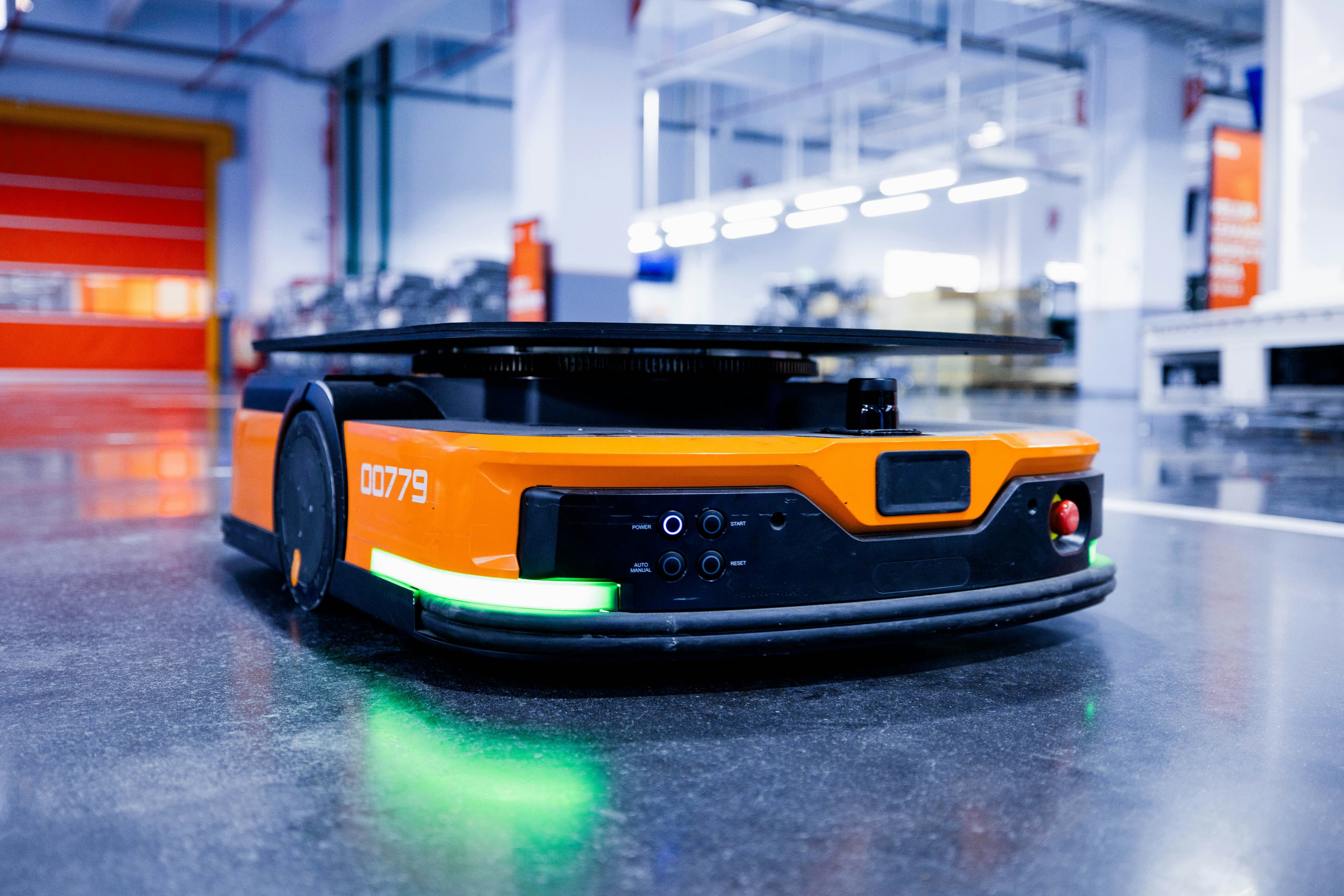
Just a few years ago, business automation was considered an expensive and highly complex solution available only to large corporations. Today, the situation has changed completely. Thanks to the rapid development of artificial intelligence, cloud infrastructure, and AI bots, automation has become accessible to almost every business — from small online stores to international enterprises.
In 2026, AI bots are no longer simple chatbots with predefined responses. Modern systems are capable of analyzing data, understanding conversational context, making decisions, and even executing complex chains of actions without human involvement.
Companies around the world are actively implementing AI automation because it helps reduce operational costs, accelerate workflows, improve customer service, and increase profitability. That is why the AI bot market is now considered one of the fastest-growing sectors of the digital industry.
In this article, we will examine how AI bots automate businesses in 2026, which technologies are used to build them, why artificial intelligence is becoming a core tool for modern companies, and how businesses use AI to scale their operations.
Why AI Bots Have Become the Main Automation Trend
Modern businesses operate in highly competitive environments. Companies must process massive amounts of information, respond to customers quickly, manage advertising campaigns, sales, analytics, and internal workflows.
Manual execution of these tasks is gradually becoming inefficient.
This is exactly why AI bots have become a key automation solution.
The primary advantage of AI systems is their ability to operate continuously without breaks, fatigue, or human error. Artificial intelligence allows businesses to automate tasks that previously required entire departments of employees.
Today, AI bots are used in almost every industry:
online stores;
SaaS platforms;
banking;
customer support;
marketing;
logistics;
IT companies;
analytics services;
educational platforms.
One of the fastest-growing areas is AI Agents — autonomous AI systems capable of independently executing complex tasks and interacting with multiple digital services.
What Next-Generation AI Bots Really Are
Many people still imagine bots as primitive systems with buttons and scripted replies. However, modern AI bots function very differently.
These systems are built on technologies such as:
Large Language Models (LLM);
NLP (Natural Language Processing);
machine learning;
semantic search;
vector databases;
generative artificial intelligence.
Thanks to these technologies, AI bots can:
understand natural language;
analyze user requests;
work with contextual information;
generate content;
perform actions through APIs;
search for information;
interact with CRM systems and databases;
automate business workflows.
In practice, AI bots are gradually evolving into full-scale digital employees.
How AI Bots Help Automate Businesses
Customer Support Automation
One of the most popular applications is customer support automation.
Previously, companies had to maintain large support teams responsible for answering repetitive customer questions. Today, AI bots handle a significant portion of this work.
Modern AI bots can:
respond to customers 24/7;
analyze support requests;
determine issue priority;
automatically create tickets;
assist with order processing;
provide consultations.
For businesses, this means:
lower operational costs;
reduced workload for employees;
faster request handling;
improved service quality.
AI bots are especially common in eCommerce and SaaS platforms.
AI in E-Commerce
E-commerce has become one of the leading industries for AI automation adoption.
Online stores use AI bots for:
product recommendations;
automatic order processing;
customer communication;
behavioral analytics;
personalized offers;
automated email campaigns;
demand forecasting.
For example, AI systems can analyze customer purchase history and automatically recommend products with a high probability of conversion.
This significantly increases both conversion rates and average order value.
Marketing Automation with AI
Marketing is another area where AI bots are transforming the industry.
Modern AI systems can:
generate SEO content;
analyze competitors;
launch advertising campaigns;
collect analytics;
create email marketing sequences;
segment audiences;
predict campaign performance.
Most importantly, AI can automate processes that previously required dozens of hours of manual work.
In 2026, many companies already use AI marketing assistants for content production and analytics.
Telegram Bots as a Business Automation Tool
Telegram has evolved far beyond a simple messaging app. It has become a complete platform for business automation.
Today, Telegram bots are actively used for:
order processing;
handling requests;
customer support;
sales automation;
task management;
notifications;
AI-powered consultations.
The main advantage of Telegram bots is rapid deployment combined with low development costs.
Many startups begin automation specifically through Telegram because it allows them to test ideas quickly without building expensive infrastructure.
AI Agents and Autonomous Systems
One of the biggest trends in 2026 is the rise of AI Agents.
An AI agent differs from a traditional bot because it can independently execute chains of actions without constant human supervision.
For example, an AI agent can:
analyze data;
detect errors;
launch processes;
manage workflows;
interact with APIs;
communicate with external services;
make automated decisions.
These systems are already widely used in:
software development;
analytics;
marketing;
technical support;
DevOps infrastructure.
AI agents are rapidly becoming next-generation digital assistants.
Technologies Used to Build AI Bots
Modern AI bots are highly sophisticated software systems.
Developers commonly use:
Backend Technologies
Python;
Node.js;
Go;
Rust;
PHP.
Python remains one of the most popular languages because of its massive ecosystem of AI libraries.
Databases
To store information, developers typically use:
PostgreSQL;
MySQL;
Redis;
MongoDB;
vector databases.
Vector databases are especially important for AI systems working with memory and semantic search capabilities.
AI APIs and Neural Networks
Most modern AI bots integrate with:
LLM models;
AI APIs;
cloud AI platforms;
NLP services.
This allows companies to deploy intelligent functionality rapidly without training proprietary models from scratch.
Why Businesses Are Rapidly Adopting AI
The primary reason is economic efficiency.
AI bots can execute tasks significantly faster than humans.
In addition:
AI works continuously;
does not require vacations;
does not experience fatigue;
scales almost without limitations.
For businesses, this means:
lower operational expenses;
higher productivity;
faster workflows;
increased profitability.
The benefits are especially noticeable in companies with large volumes of repetitive tasks.
AI and the Future of Digital Business
Experts believe that AI will become the foundation of most digital services within the next several years.
We are already seeing the emergence of:
autonomous AI teams;
self-improving systems;
AI developers;
AI analysts;
AI customer support agents;
AI workflow automation.
Companies are gradually moving from basic automation toward intelligent AI systems capable of adapting independently to changing environments.
This fundamentally transforms the way businesses operate.
How the AI Automation Market Will Change in the Coming Years
In 2026, the AI bot market continues to grow rapidly.
The primary areas of development include:
AI Agents;
autonomous digital assistants;
AI integrations;
AI automation platforms;
generative AI;
intelligent SaaS services.
Companies that begin implementing AI today gain a major competitive advantage.
Within a few years, AI automation may become as standard for businesses as CRM systems or cloud services.
Why AI Bots Are Becoming an Essential Part of Business
Markets are becoming faster and increasingly competitive.
Companies that continue relying entirely on manual workflows are gradually losing to more technologically advanced competitors.
AI bots help businesses:
accelerate workflows;
improve efficiency;
scale operations;
enhance customer service;
automate repetitive tasks;
reduce expenses.
That is why AI and automation are no longer experimental technologies — they have become essential tools for modern business.
Conclusion
In 2026, AI bots are becoming the foundation of digital business transformation. Artificial intelligence helps companies automate workflows, improve customer service, increase profitability, and scale operations significantly faster than ever before.
Modern AI systems are already capable of performing many tasks without human involvement, while the development of AI Agents is gradually bringing the market closer to fully autonomous digital employees.
Companies that begin implementing AI automation today gain a massive advantage for the future. That is exactly why AI bot development, workflow automation, and artificial intelligence integration are becoming some of the most important directions in the modern IT industry.